Appliances
The 3 Best Air Purifiers of 2026, Tested by SAVEN
Whether it is pollen in spring, wildfire smoke in summer, or a dog that sheds year-round, the right air purifier quietly takes the edge off all of it. These three models cover everything from a small bedroom to an open-plan living space.
When we assess an air purifier, we look for true HEPA filtration, a clean air delivery rate matched to the room it will serve, and noise levels you can sleep through on the lower settings. Running costs matter too: a bargain machine with pricey, short-lived filters can cost more over three years than a premium rival. Smart features are a bonus, never a substitute for filtration.
Our Top Picks
- Levoit Core 300S — Best Overall
- Coway Airmega 150 — Best Design
- Blueair Blue Pure 211+ — Best for Large Rooms
1. Levoit Core 300S
Best Overall
SAVEN Score: 4.8 / 5
The Core 300S hits the sweet spot of price, performance, and polish for most bedrooms and home offices. Its three-stage filtration — pre-filter, HEPA filter, and activated carbon — handles dust, pollen, and everyday odors, while the sleep mode drops noise to a whisper for overnight use. The VeSync app adds scheduling, filter-life tracking, and an air-quality readout, and the auto mode adjusts fan speed as conditions change. At around $150, it is the purifier we recommend first, and the one most households will be happiest living with.
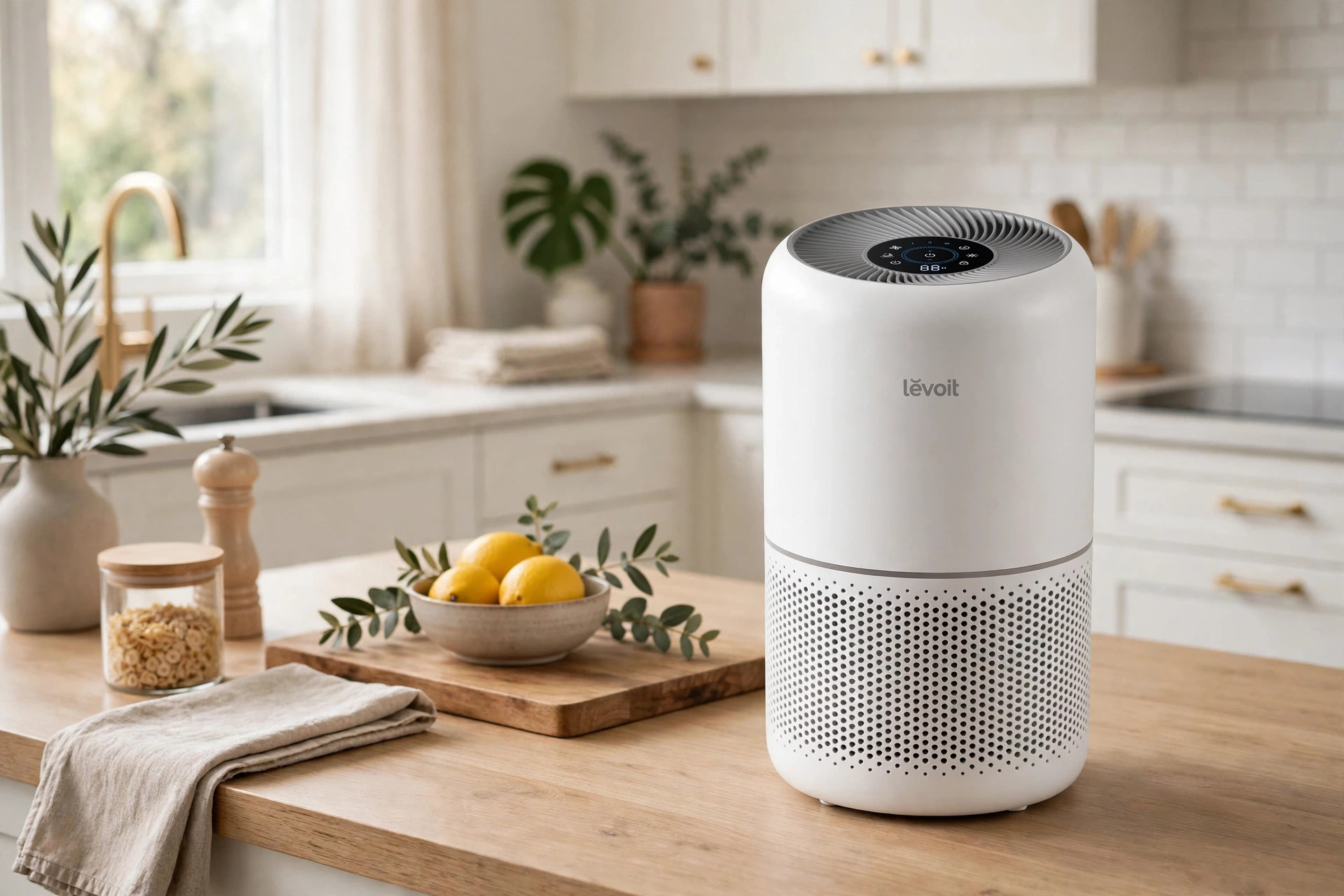
- Suited to rooms up to about 187 sq. ft.
- Three-stage filtration with HEPA filter
- App control, auto mode, and quiet sleep mode
What we like
- Quiet enough for light sleepers
- Smart features at a mid-range price
What to consider
- Too small for large open-plan areas
- Replacement filters are proprietary
2. Coway Airmega 150
Best Design
SAVEN Score: 4.6 / 5
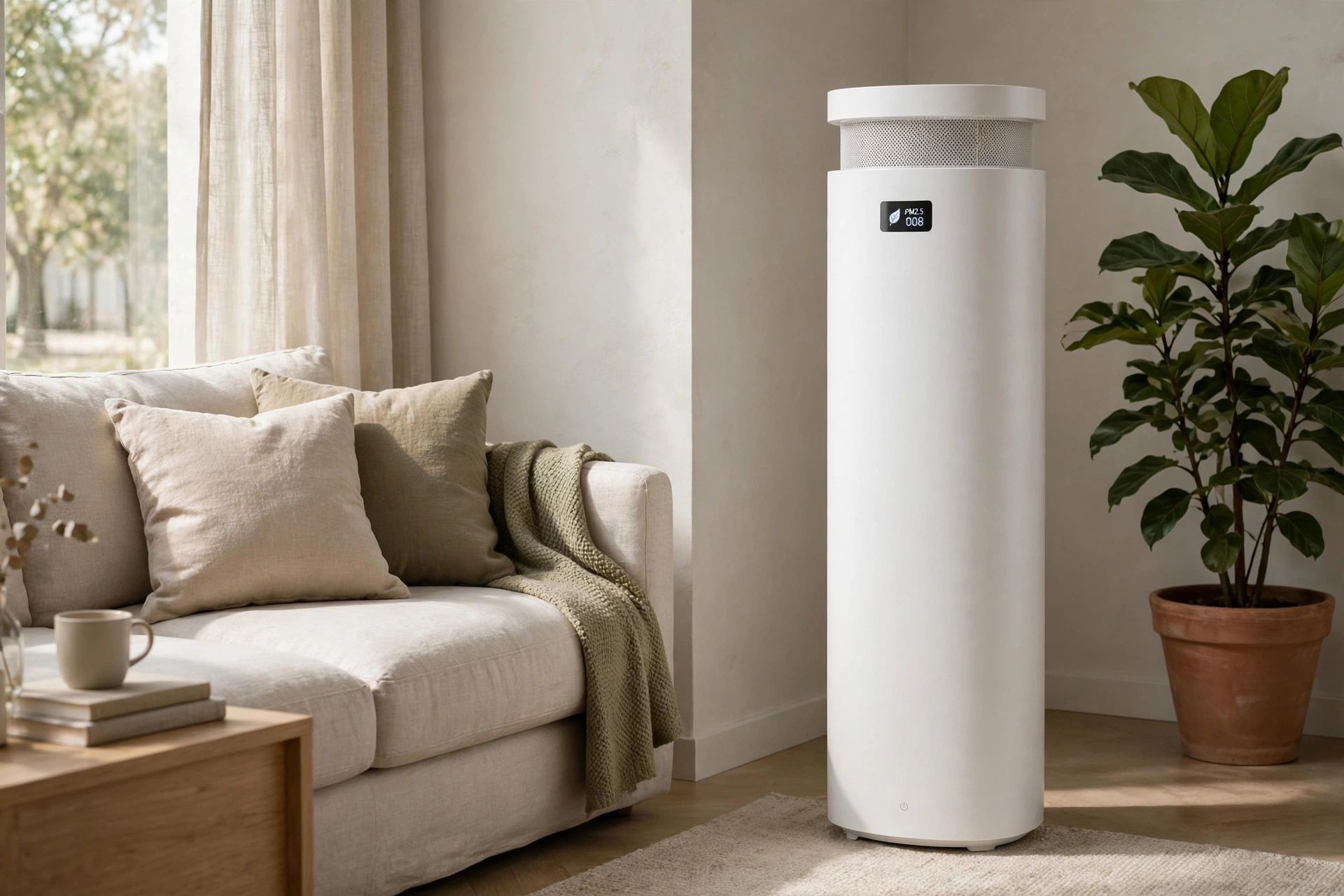
Most purifiers look like appliances; the Airmega 150 looks like furniture. Behind the clean, fabric-friendly styling sits a capable filtration system with a washable pre-filter and a GreenHEPA filter that captures fine particles and odors. A real-time air-quality indicator changes color as conditions shift, and eco mode pauses the fan when the air stays clean for a stretch, saving energy. It is sized for bedrooms and smaller living rooms, and its gentle curves make it the rare purifier guests will not ask you to hide.
- Suited to rooms up to about 214 sq. ft.
- Washable pre-filter plus GreenHEPA filter
- Real-time air-quality indicator light
What we like
- Attractive design in several finishes
- Eco mode cuts energy use automatically
What to consider
- No app or smart-home control
- Costs more than similarly sized rivals
3. Blueair Blue Pure 211+
Best for Large Rooms
SAVEN Score: 4.7 / 5
Big rooms defeat small purifiers, and the Blue Pure 211+ is built for exactly that problem. Its tower design draws air in from all sides and pushes a high volume of cleaned air through a large particle-and-carbon filter, making it a strong fit for open-plan living areas and basements. The washable fabric pre-filter doubles as a design accent and comes in several colors, and operation is a single button with three speeds. It is not subtle in size, but for large spaces it is refreshingly simple and effective.
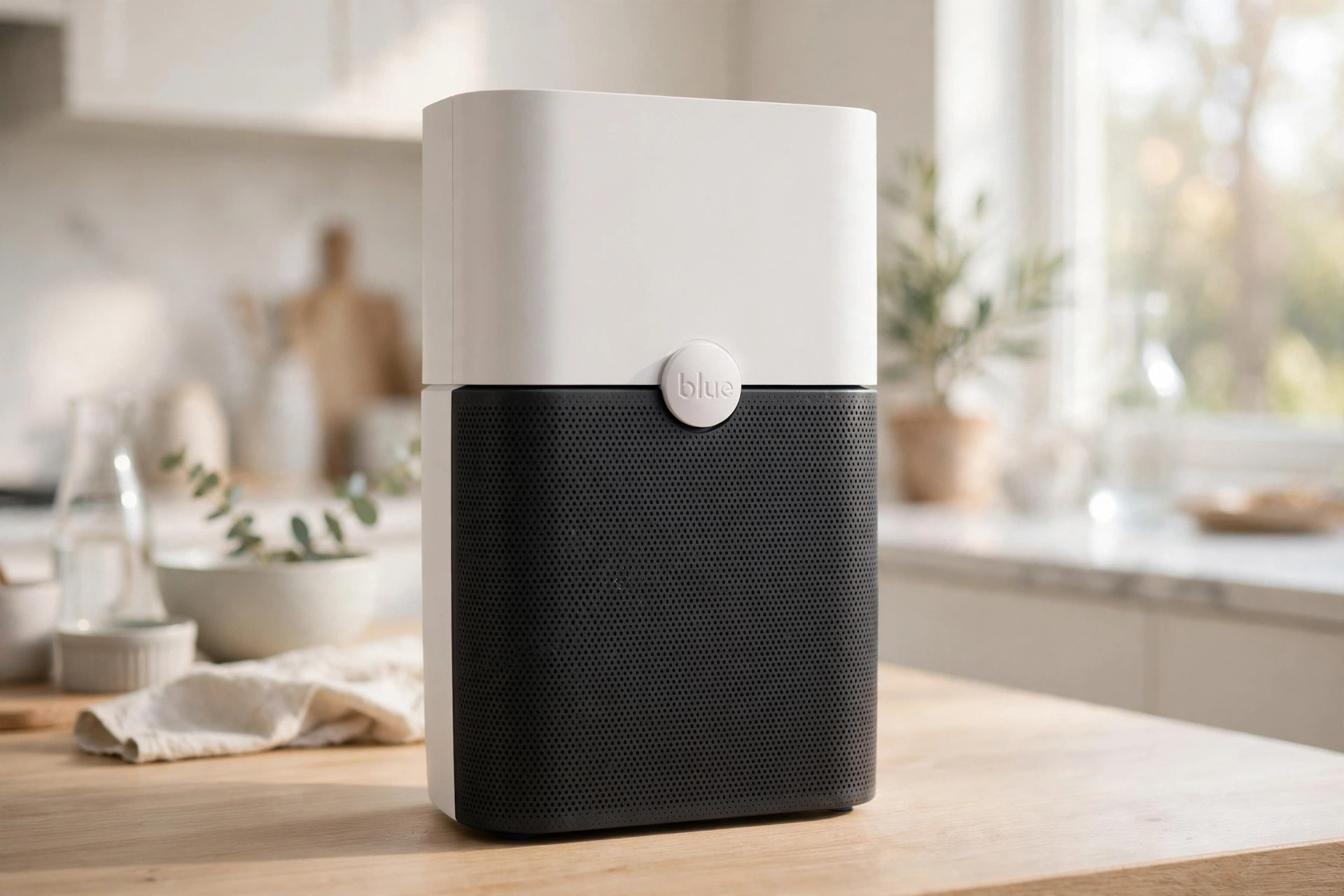
- Suited to rooms up to about 540 sq. ft.
- 360-degree air intake
- Washable fabric pre-filters in multiple colors
What we like
- High airflow for big, open spaces
- Dead-simple one-button controls
What to consider
- Large footprint and no smart features
- Can be loud on the top speed
What to Look For in an Air Purifier
Match the machine to the room first. Manufacturers rate coverage by square footage, and a purifier should exchange the room's air several times an hour, so size up if your ceilings are high or doors stay open. Insist on true HEPA filtration for particles — it captures 99.97% of particles down to 0.3 microns — and look for a substantial activated-carbon stage if odors, smoke, or cooking smells are your main complaint. Check the noise rating at low speed for bedrooms, and price the replacement filters before you buy: they are the real long-term cost of cleaner air.
Frequently Asked Questions
Where should I place an air purifier?
Give it breathing room: a few feet from walls and furniture, near the source of the problem if there is one — a litter box, a bedroom doorway, or the kitchen's edge. Closed doors help it cycle the room's air more times per hour.
How often do filters need replacing?
Most HEPA and carbon filters last six to twelve months depending on use and air quality, and many models have indicator lights. Vacuum washable pre-filters monthly; a clogged pre-filter makes the main filter work harder and shortens its life.
Should I run my purifier all day?
Continuous use on auto mode is the norm and usually costs little in electricity, since modern units draw modest power at low speeds. Auto mode also responds when cooking or cleaning temporarily worsens the air, which is when you need it most.